In many enterprise maintenance programs, the terms “predictive” and “condition-based” are used interchangeably.
They should not be.
The confusion is understandable. Both approaches aim to prevent failure before it occurs. Both rely on asset data. Both promise reduced downtime and better reliability. Yet the operational implications of each are materially different — especially within structured platforms such as Oracle Maintenance Cloud.
The distinction is not semantic. It is strategic.
Condition-based maintenance (CBM) emerged as a response to rigid time-based preventive programs. Instead of servicing equipment on fixed intervals, organizations began triggering work when condition thresholds were breached — vibration exceeding limits, temperature rising beyond tolerance, oil analysis indicating contamination.
This represented progress.
Maintenance became data-aware rather than calendar-bound.
However, condition-based models remain fundamentally reactive. They detect abnormal states once measurable deviation crosses predefined boundaries. The intervention is earlier than failure — but often not early enough to prevent operational disruption entirely.
In practice, CBM answers one question well:
Has the asset crossed a warning threshold?
It does not answer a more important one:
When is the asset likely to cross it?
Predictive maintenance extends beyond threshold detection. It evaluates patterns across historical performance, degradation trajectories, operating conditions, and contextual variables to estimate failure probability over time.
Rather than responding to a limit breach, predictive systems assess risk accumulation.
This shift from event-based detection to probability modeling changes planning behavior. Instead of scheduling interventions in response to alerts, organizations can align maintenance with production cycles, labor availability, and inventory readiness.
The move is subtle but powerful: from reaction optimization to disruption prevention.
Structured enterprise systems already contain much of the data required for predictive modeling:
When these elements are consistently governed within Oracle environments, they create the foundation for pattern recognition across asset lifecycles.
The maturity of predictive capability often correlates less with sensor sophistication and more with data governance discipline.
Organizations that struggle with inconsistent failure coding or incomplete work order closure notes rarely achieve reliable predictive outcomes — regardless of analytics investment.
Most enterprises do not move directly from preventive to predictive maintenance. They pass through a condition-based stage. The risk is stagnation.
At some point, adding more thresholds yields diminishing returns. Maintenance teams become overwhelmed with alerts that are technically valid but operationally misaligned. Production leaders question the value of frequent interventions. Planners revert to experience-based judgment.
This is the inflection point.
To progress, organizations must transition from monitoring asset state to modeling asset behavior.
That requires not only technology, but governance alignment — asset criticality frameworks, standardized failure modes, and integrated planning processes.
Even the most advanced predictive model fails if execution lags.
Technicians must access work context in the field. Inspection data must be captured accurately. Feedback loops must update system intelligence in near real time. Without seamless synchronization between planning layers and frontline activity, predictive insights degrade into theoretical advantages.
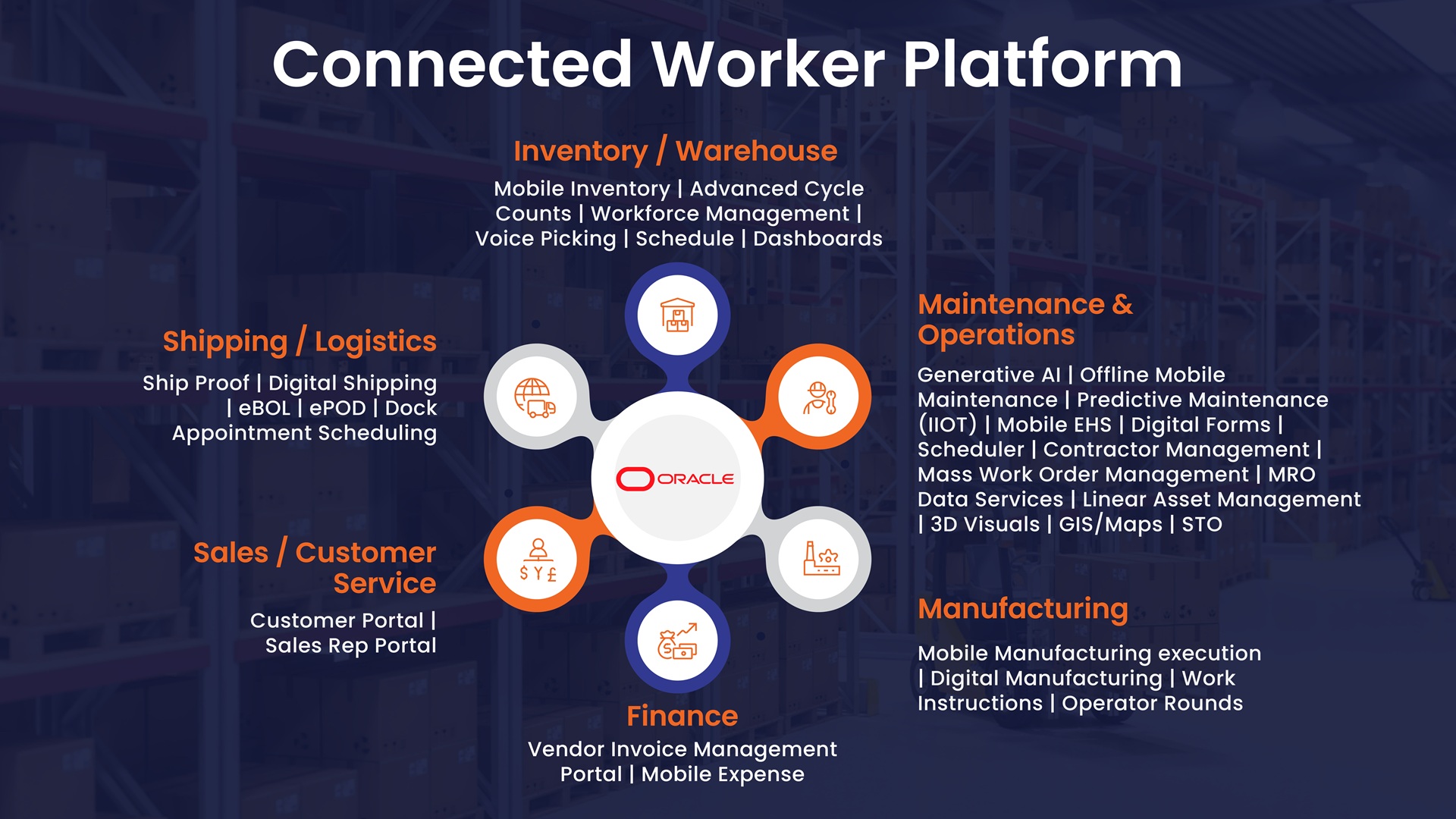
This is where connected worker platforms become strategically relevant — not as mobility add-ons, but as execution enablers that complete the predictive cycle.
Predictive intelligence without execution discipline merely shifts complexity upstream.
Organizations transitioning from condition-based to predictive models typically observe gradual but measurable shifts:
The transformation is rarely dramatic in the first quarter. It compounds over time as models learn and governance stabilizes.
The real indicator of success is not fewer alerts.
It is fewer unexpected disruptions.
The debate between predictive and condition-based maintenance is not about choosing a superior method. Condition monitoring remains foundational.
The question is whether the organization intends to optimize reaction — or reduce uncertainty.
In complex Oracle-based environments, where asset data is structured and operational interdependencies are visible, the opportunity is clear. Enterprises that treat predictive capability as an operating model evolution — rather than a reporting enhancement — move closer to sustained reliability stability.
Ready to move beyond? Transitioning to a digital-first maintenance strategy doesn't have to be complex. We’ve helped global teams digitize their floor operations without disrupting their existing workflows. Our Connected Worker Solution is built for the field and your teams.